
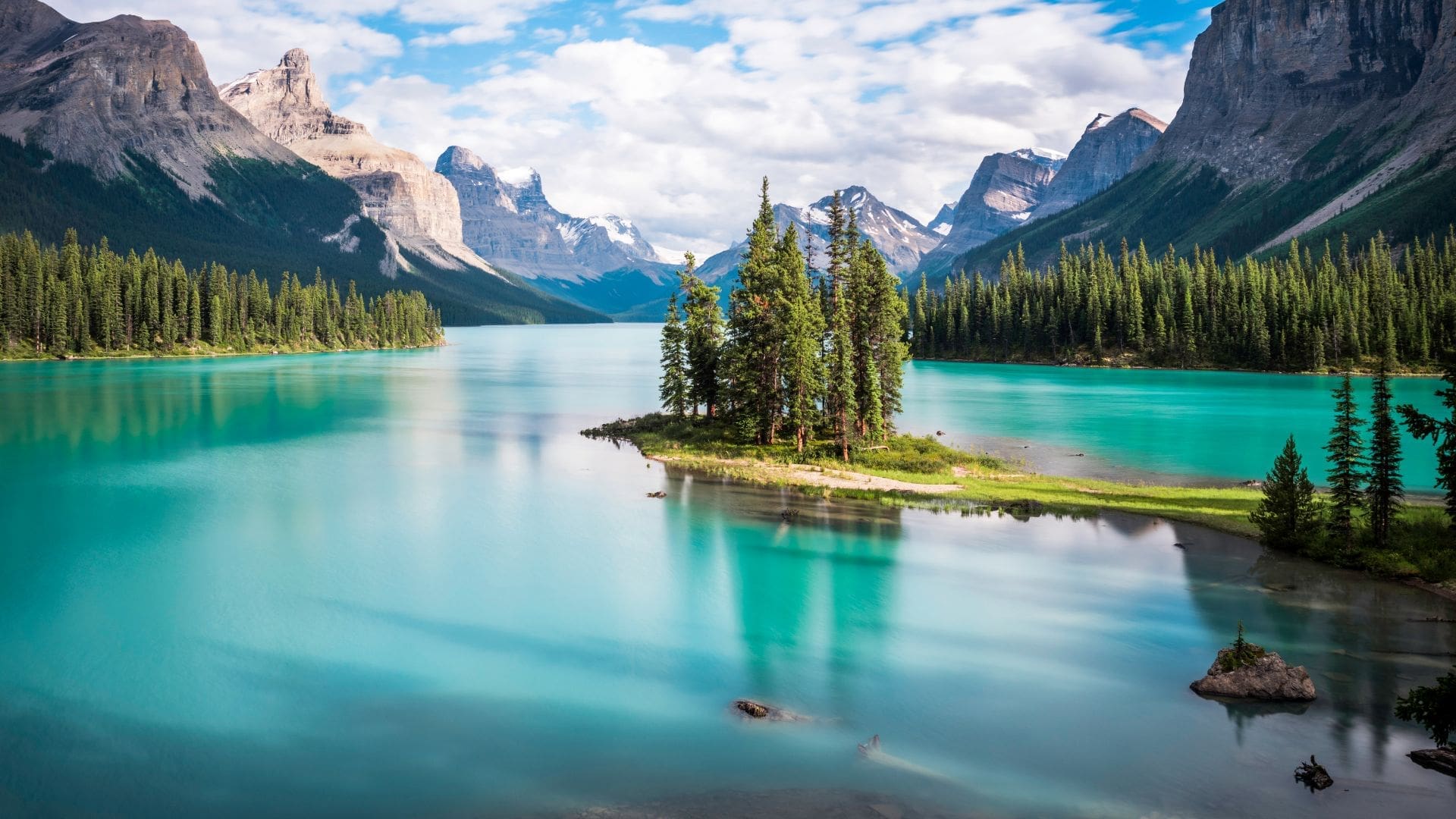
In 1966, a crude oil release occurred within a wetland area in Jasper National Park after rock displaced during highway blasting damaged a pipeline. Visible oil impacts were removed in accordance with the practices and standards in place at the time. Decades later, during pipeline maintenance activities in 2021, residual petroleum hydrocarbon impacts were identified in shallow soil and groundwater approximately eight kilometres west of the Jasper townsite.
The site presented significant remediation challenges. The affected area is located within a federally regulated national park. It also includes sensitive wetland and riparian habitat, has no road access, and is situated along an active pipeline corridor.
Conventional excavation and off-site disposal were considered; however, that approach would have required substantial disturbance to wetland soils, vegetation, wildlife habitat, and temporary access routes.
Alta Tech developed and implemented a low-disturbance in-situ microbial treatment program to reduce petroleum hydrocarbon concentrations while minimizing disturbance to the surrounding environment.
Based on comparison of post-treatment sample results to pre-treatment conditions within the same assessed treatment areas, approximately 70% of the sampled locations have met applicable criteria following two treatment seasons. The selected approach is estimated to have avoided approximately $6 million in costs compared with Alta Tech’s conventional excavation, off-site disposal, access construction, and reclamation cost estimate for the same issue.
Site Setting and Environmental Constraints
The impacted area is located within Jasper National Park, on and adjacent to an active pipeline right-of-way. The site is remote, access-constrained, and environmentally sensitive.
Key site conditions included:
- No road access to the treatment area;
- High seasonal snow accumulation;
- Dense vegetation and wetland terrain;
- Marsh, fen, swamp, riparian, and forested habitat;
- Multiple waterbodies and aquatic habitat considerations;
- Variable shallow soils consisting of sand, silt, clay, and peat;
- Shallow petroleum hydrocarbon impacts generally within the upper two metres below ground surface; and
- Contaminants of concern including BTEX, petroleum hydrocarbon fractions F1 to F4, and PAHs
The original impacted area was approximately 0.8 hectares within a broader three-hectare project area.
Regulatory and Technical Framework
The project was completed within a federal regulatory framework involving Parks Canada and the Canada Energy Regulator. Remediation criteria were based on applicable federal environmental quality benchmarks, including CCME soil quality guidelines and groundwater or surface-water protection criteria for freshwater aquatic life, with federal interim values applied where CCME criteria were not available.
Because the site is located within Jasper National Park, federal criteria formed the primary regulatory basis for the remediation program. Alberta provincial remediation guidelines were not the governing cleanup criteria for this federally regulated site.
The remediation approach also required environmental impact assessment and mitigation planning for:
- Wetlands and aquatic habitat;
- Surface water and groundwater;
- Fish and fish habitat;
- Vegetation and invasive species;
- Wildlife and species at risk;
- Archaeological resources;
- Soil and landform disturbance; and
- Traditional Land Use considerations
Remedial Options Assessment
Alta Tech evaluated several remedial options, including:
- Monitored natural attenuation;
- Excavation and off-site disposal;
- In-situ chemical oxidation;
- In-situ microbial treatment; and
- Reactive barrier installation
The options were assessed based on effectiveness, constructability, environmental disturbance, residual risk, regulatory acceptability, and cost.
In-situ microbial treatment was selected because it provided the best balance of treatment effectiveness and environmental protection. Bench-scale column testing was completed using site soil, and groundwater demonstrated petroleum hydrocarbon reductions ranging from approximately 30% to 100% over 45 days, supporting the feasibility of biological treatment under site-specific conditions.
Compared with excavation, the selected approach significantly reduced the need for access construction, heavy equipment, wetland disturbance, material handling, off-site disposal, and large-scale surface reclamation.
Treatment Product and Microbial Selection
The selected treatment product was BioNorth’s Microbiate, a microbial amendment cultured from hydrocarbon-degrading bacterial strains associated with northern Canadian soils.
Two characteristics were important for this site:
- The product included multiple hydrocarbon-degrading strains capable of treating BTEX and PHC fractions F1 to F4; and
- One strain, R15, was identified as effective for PAH degradation
The product’s temperature tolerance was an important selection criterion for this project. Microbiate has a reported active temperature range of approximately 0°C to 49°C. This was well suited to the Jasper National Park setting, where subsurface and seasonal site temperatures remain low for much of the year. The ability to remain active near 0°C provided a practical advantage over microbial products with lower operating limits closer to approximately 5°C to 8°C, as reduced biological activity at low temperature can limit treatment effectiveness and extend remediation timelines.
Because the project was located in a national park and near sensitive aquatic habitat, microbial selection was reviewed carefully. Laboratory genetic analysis was completed on both the microbial community already present at the site and the treatment organisms being generated for application. The results indicated that the treatment organisms were consistent with bacterial groups already detected at the site, reducing concern regarding introduction of non-native microbial organisms.
The R15 strain was managed conservatively based on the project toxicology review, which identified potential aquatic sensitivity considerations under certain exposure conditions. Since R15 was the primary strain targeting PAHs, it was applied in the right-of-way and clay treatment areas where PAH reduction was required, but it was withheld from treatment areas adjacent to the Miette River.
Overall, the selected microbial treatment product provided a site-appropriate combination of hydrocarbon degrading capability, PAH treatment potential, low-temperature activity, and compatibility with the environmental protection requirements of a federally regulated national park setting.
Environmental Protection and Indigenous Engagement
The treatment program was designed to minimize disturbance and protect aquatic and terrestrial receptors.
Simpcw Resources Group partnered on the project, and Indigenous monitors were present during injection activities.
Field mitigation measures included:
- Helicopter transport of equipment and supplies;
- Foot access only within the work area;
- Hand-operated and low-disturbance injection methods;
- No vehicle access to the wetland treatment area;
- Removal of fuel, food, and waste from site at the end of each day;
- Secondary containment and spill-response supplies;
- End-of-pipe fish screens for water handling;
- Equipment cleaning and disinfection protocols to reduce aquatic invasive species and disease risk;
- Compliance with Parks Canada wildlife flight guidance; and
- Implementation of applicable Fisheries and Oceans Canada interim code of practice measures
Treatment Design by Ground Condition
The treatment program was adapted to the site’s variable hydrogeologic and soil conditions. A single application approach would not have been effective across the full site because peat, sand, lay, and right-of-way fill have different permeability and distribution characteristics.
Treatment methods were adjusted as follows:
Pipeline right-of-way
Within five metres of the active pipeline, ground disturbance was restricted. Surface application was used within this setback, and injection was completed beyond the restricted area where permitted.
Marsh and peat areas
Lower-pressure injection and wider spacing were used where permeability allowed treatment distribution through saturated and organic-rich materials.
Sand areas
Lower-pressure injection was effective because the higher-permeability material allowed distribution of the treatment amendment.
Clay areas
Clay required a different approach. After limited response during the first treatment season, the application method was revised to use higher injection pressure and tighter injection spacing to improve amendment contact in lower-permeability soil.
Injection pressures were controlled at or below 1,000 psi to maintain controlled distribution, reduce the potential for surfacing or short-circuiting, and remain within product and application constraints.
Treatment Results
The first injection event was completed in September 2024 after project delays related to the July 2024 Jasper-area wildfires. The second treatment event, which took place June 2025, was modified based on the first-season results. Injection spacing was tightened in clay, injection pressure was increased within controlled limits, and the proportion of R15 was increased in right-of-way and clay treatment areas where PAHs remained a treatment objective. R15 continued to be excluded from areas adjacent to the river.
Three-month monitoring confirmed continued reduction trends in petroleum hydrocarbons and PAHs, with additional sampled locations meeting applicable criteria. A small number of right-of-way locations showed isolated increases in naphthalene and pyrene, which are being used to refine the next treatment event.
Across the program, the highest starting concentrations showed the greatest early reductions. For one target petroleum hydrocarbon parameter, concentrations declined from approximately 60,000 mg/kg to approximately 5,000 mg/kg within about one month, with the rate of reduction moderating as concentrations decreased.
Current Program Status
Soil and groundwater monitoring has continued throughout 2026. Additional treatment is planned to address remaining isolated impacts and improve treatment response in areas where natural nutrient availability is low, particularly along the pipeline right-of-way.
The next treatment phase is expected to include customized nutrient amendments and continued use of higher-pressure, tighter-spacing application methods in clay-dominated areas.
The program remains on a positive trajectory toward closure for the majority of the treated sample locations while maintaining a low-disturbance approach appropriate for a national park wetland setting.
Technical Lessons Learned
This project demonstrates several important remediation principles:
- Biological treatment can achieve substantial reductions where site conditions support microbial activity, particularly at higher starting hydrocarbon concentrations
- Treatment response typically slows as concentrations decline, which must be considered in monitoring and closure planning
- Strain selection matters. General hydrocarbon-degrading microbial blends may not adequately address PAHs without targeted microbial capability
- Hydrogeology controls application design. Injection pressure, spacing, amendment volume, and application method must be adapted to soil type and permeability
- Low-disturbance remediation can be practical and effective in remote, access-constrained, and ecologically sensitive settings
- Successful in-situ remediation requires integration of environmental engineering, hydrogeology, microbiology, regulatory planning, Indigenous engagement, and field execution
At this site, the in-situ microbial treatment program reduced environmental disturbance, advanced the site toward regulatory closure, and provided a substantial cost advantage compared with conventional excavation and off-site disposal.
This project demonstrates the value of combining site characterization, hydrogeology, remediation planning, microbiology, regulatory strategy, and field execution into one integrated approach.
By adapting the treatment method to site-specific soil, groundwater, access, and ecological conditions, Alta Tech was able to advance remediation while minimizing disturbance within a sensitive national park setting.
Work with a team that combines technical depth, practical insight, and true collaboration across remediation, hydrogeology, site characterization, and regulatory compliance. Together, we develop practical solutions that safeguard today and build resilience for tomorrow.
Contact us to learn more.