
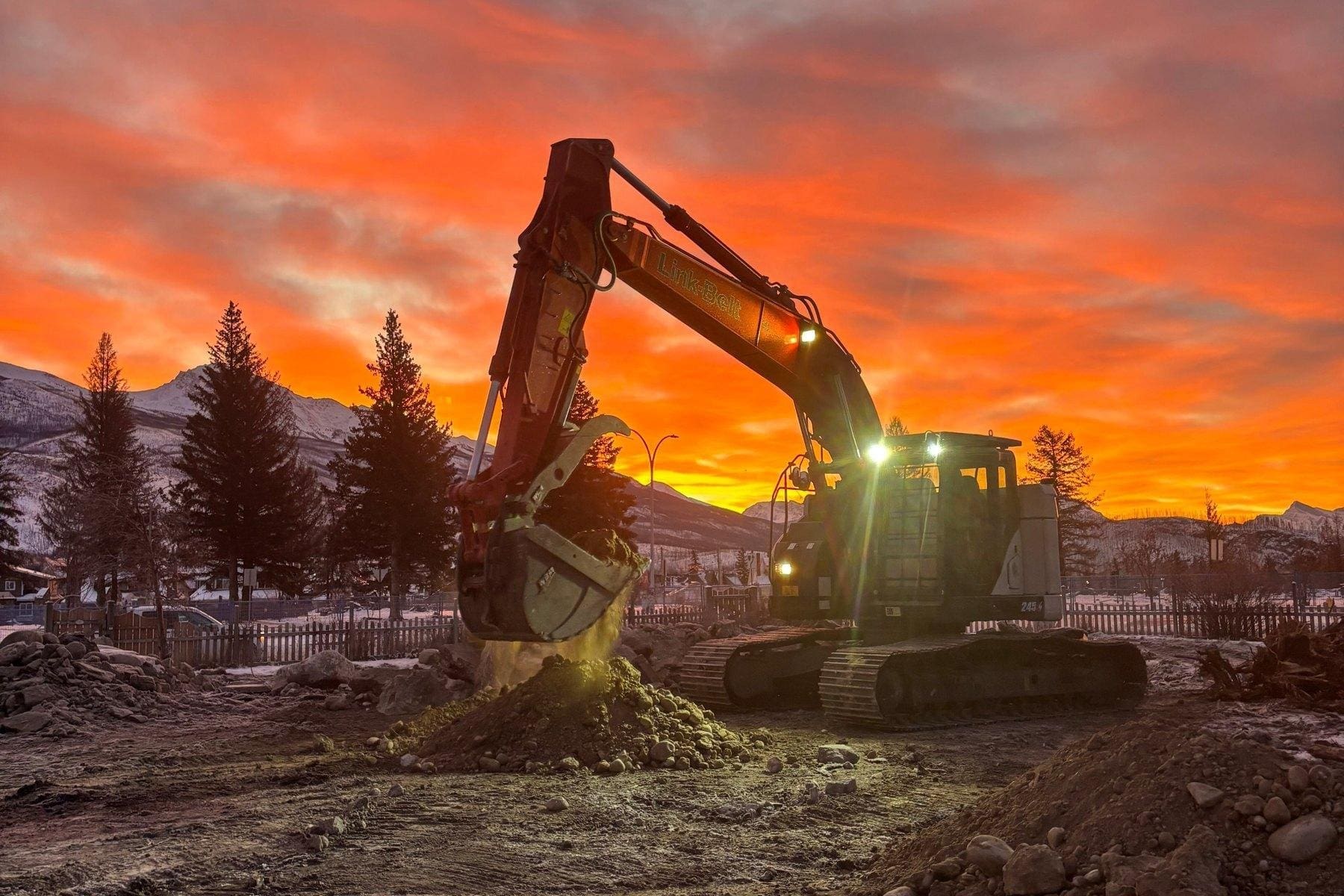
Following the 2024 Jasper wildfire, every destroyed property needed environmental assessment before it could be demolished, and again before it could be rebuilt. Alta Tech managed that work across more than 200 fire-impacted sites out of our Jasper office.
The biggest obstacle wasn’t the fieldwork; it was laboratory turnaround. Specialized analyses for dioxins, furans and PFAS were returned in eight to 12 weeks. A risk-based sampling framework that cut the parameter list from 70 down to 19, combined with new analytical capacity opening in Calgary in January 2025, brought that timeline down to three weeks.
What we actually do in Jasper
Our work starts after the fire is out. It sits between a destroyed structure and a building permit, and the scope covers four items:
- Pre-demolition and post-demolition assessment and reporting across 200+ residential and commercial properties requiring contaminated site testing.
- Determining the threshold limits. Parks Canada regulates inside the national park, sets the requirements and holds final approval. We took part in the technical process that determined the contaminants of concern and the sampling procedure needed to protect human health. Most of that attention went to post-demolition conditions, because that’s where the residual risk to future occupants sits.
- Continuous air monitoring and spot testing at sites slated for demolition, focused on asbestos and dust.
- Stakeholder liaison. This one wasn’t in the original scope.
How assessment work turned into a coordination job
A single burned lot in Jasper can involve a federal regulator, the municipality, an insurance company, a property owner, a demolition contractor and occupational health and safety. Each of them has a different clock and a different definition of “done.”
Our team was on the ground at every site and held the technical record for each one, so we became the liaison between the regulator and the clients. Somebody had to keep track of what had been sampled, what the results meant, and what would satisfy the approval requirements. Increasingly, that was Alta Tech.
We didn’t set out to do it at first, but an assessment program that produces good data and then hands it into a coordination vacuum doesn’t get anyone home faster. So we took the coordination on ourselves.
What burns, and what gets left behind
A structure fire and a forest fire leave very different residues. What makes urban ash more hazardous are the building and contents, not the trees.
The contaminants of potential concern assessed across Jasper’s fire-impacted properties are set out in Parks Canada’s demolition permit conditions:
| Contaminant group | Why it matters after a structure fire |
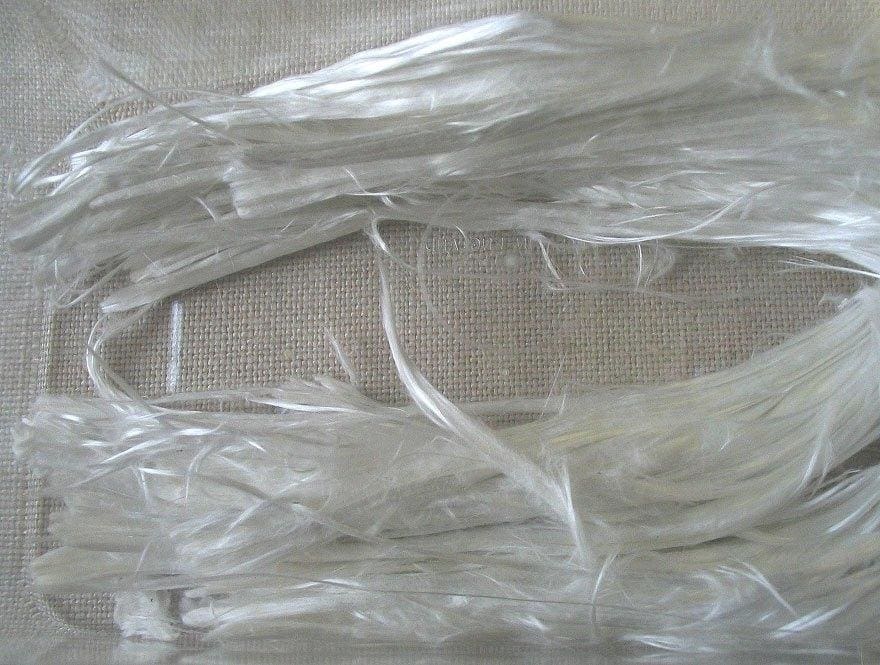
| Asbestos | Used in siding, roofing, insulation, pipe wrap and wiring well into the late 20th century, precisely because it resists fire. Heat doesn’t destroy it. It degrades the binder and leaves the fibres friable, so a burned building can be more hazardous than an intact one. |
| Petroleum hydrocarbons | Fuel, heating oil, vehicles and stored products released during the fire. |
| Polycyclic aromatic hydrocarbons | Products of incomplete combustion, present in ash and char. |
| Volatile organic compounds | From burned building materials and stored household products. |
| Heavy metals | Concentrated in ash from wiring, paints, treated materials and appliances. |
| Dioxins and furans | Formed when chlorinated materials such as PVC and treated wood burn. Toxic at very low concentrations: the CCME residential/parkland guideline is 4 nanograms TEQ per kilogram (4 parts per trillion). |
| Silica | Released from concrete, masonry and drywall during demolition. Mainly a respiratory hazard for the crews doing the work. |
| PFAS and other flame retardants | Present in the building and its contents: fire retardants, carpets, furniture, textiles, cookware, electronics, coatings. |
Each of these must be measured against a benchmark before a property can be cleared to receive a building permit. In Jasper that benchmark is the CCME residential/parkland soil quality guidelines, with other authorities’ guidelines applied where CCME has no published value. “Clean enough” isn’t a judgment call. It’s a number, set in advance and approved by the regulator.
Asbestos is the contaminant most people know about, and in Jasper it was flagged specifically because of how old many of the buildings were.
The timeline problem, though, sat with dioxins, furans and PFAS analyses. Parks Canada states the reason plainly in its own guidance: these compounds are toxic at very low amounts, they’re hard to detect, and few laboratories hold the specialized equipment to test for them.
CCME has published a soil quality guideline for PFOS, at 0.01 mg/kg, and the same value applies across all four land-use categories because the limiting pathway is protection of potable groundwater. Additional receptors include wildlife, soil, and food ingestion. Alberta’s Tier 1 tables adopt it, but that covers one compound. For the wider PFAS family, PFOA included, soil criteria are still under development, so benchmarks have to come from other environmental authorities.
Mandatory analysis, scarce instrumentation, and criteria that exist for one compound but not its relatives combined to turn three parameters into a queue.
A point worth making: this protocol is ahead of the field
PFAS wasn’t part of the Fort McMurray 2016 protocol. Parks Canada says so directly, and describes adding it for Jasper as a deliberate change.
It’s also absent from the analyte lists of the major American post-fire soil clearance programs. California’s 2025 sampling plan for the Eaton and Palisades fires specifies Title 22 metals. Los Angeles County’s community soil study covered roughly 35 analytes across metals, PAHs and dioxins. Maui and the Marshall Fire were metals-led. None of them carry PFAS in property clearance.
To evaluate the presence of PFAS, which can be found in a variety of products commonly used in residential and commercial settings, soil samples were collected following the completion of demolition and cleanup activities. Of the approximately 200 properties sampled in Jasper, no soil samples exceeded the applicable CCME guidelines. These results indicate that PFAS was not a significant contaminant of concern and was unlikely to be present at concentrations that pose a risk to human health or the environment.
The bottleneck was the analysis, not the field
We could sample a property in a day. Getting results back was the constraint.
Through late 2024, turnaround for the specialized analyses was running eight to 12 weeks. Two things converged. Canada had limited domestic capacity for those parameters to begin with, and demand spiked from both the Jasper recovery and the wildfire response in California that followed.
A 12-week lab queue isn’t just a scheduling inconvenience. It’s a family in temporary accommodation for another season, a demolition contractor idling, and a building permit that can’t be issued.
So, we treated it as an engineering problem and worked on it from two directions.
1. Reduce what needs analyzing, without reducing protection
The instinct after a disaster is to test everything, everywhere. It feels careful, but in practice it isn’t safer and it’s very slow.
We ran a technical review and a risk-based evaluation of the sampling framework. Pre-demolition characterization sampling provided information on the specific contaminants of concern that could potentially impact the underlying soil. Our approach combined site-specific findings with a Jasper-wide contaminant selection process to ensure potential risks to human health and the environment were appropriately addressed, while also considering project costs and timelines.
The parameter list came down from 70 to 19.
That’s a 73% reduction in what had to be analyzed on each sample, with the environmental protection objectives held intact. It did two things at once. It cut costs for Jasper residents and commercial owners, and it took load off the same laboratory queue that was holding up demolition closure and development permitting.
The important part is where the framework ended up. It went through the regulator’s process and carried Parks Canada’s approval, which is why it held. A scope reduction you win in an argument gets reopened later. One that’s been reviewed and approved doesn’t.
2. Add capacity where there wasn’t any
The second direction was supply.
Our technical group worked on the problem directly with AGAT Laboratories. AGAT was able to bring forward an optimized extraction technique bringing down dioxin and furan from multiple days to a few hours, with PFAS, in January 2025 AGAT brought online two instruments online to increase their daily capacity greatly, in addition added new automation technology increasing the number of batches of PFAS per day by nearly three times.
Combined with the shorter parameter list, that took most of a season out of the queue for every property still waiting.
It’s the one result from this program we’d most want other communities to know about, because the next town this happens to is going to hit the same wall.
What “clean enough” actually means here
All of the above rests on a framework that people get wrong on the first pass fairly often, including consultants, because Jasper isn’t governed the way a comparable site elsewhere in Alberta would be.
The townsite is federal Crown land. Residents hold leaseholds and own the structures, not the ground. Alberta’s contaminated sites and reclamation regime doesn’t reach these lots, because the province’s own legislation excludes land owned by the Crown in right of Canada. There’s no Alberta Tier 1 comparison here, and no Alberta remediation certificate at the end of it.
What governs instead is a set of conditions attached to the demolition permit. In practice, that gave every property the same sequence:
- Waste characterization. Sampling the ash and debris before it moves, to satisfy the receiving landfill. Nothing gets disposed of inside the park.
- Debris removal, with continuous air monitoring for asbestos and particulates. A hard stop-work trigger on any exceedance.
- A mandatory strip of surface soil from the ash- and debris-affected areas around the structure, hauled out of the park.
- Confirmatory sampling on a defined grid across the excavation walls and floor. This is the test that clears the lot.
- A report to the regulator before backfill, not after.
- Backfill only from a verifiable, approved source.
Get step one wrong and you’re re-sampling at step four. Get step four wrong and the property escalates the two core variables at stake; cost and time.
This is what we mean when we say the regulatory pathway determines what the technical work needs to be. In Jasper the pathway was being written while the work was being done, which is exactly why it mattered to be in the room for it.
Versatility with depth, and why the local team mattered
Our core value is versatility combined with depth. Jasper tested both.
The Jasper office provided technical stewardship of the critical thresholds driving the pre- and post-demolition progression, and at the same time held alignment across a stakeholder group that included Parks Canada, the Town of Jasper, business owners, residents and the contractors doing the work. That alignment came out of a consistent project management approach with a core local team in place from the start of the rebuild effort.
Staying in front of a plan that size, for that long, took a dedicated and focused team. The footprint and the technical responsibility we were carrying meant balancing compliance against the thing everyone actually wanted, which was getting people home safely.
The people leading that work live in Jasper. It’s their town and their region. They took it personally, and I think that puts a different dynamic on the table than a crew flown in for a rotation does.
For more than 10 months the team worked the hours the file required, with one priority ordering every decision. Get people home as soon as we safely could.
There’s something to be said for that.
What we’d tell the next community
Wildfire recovery programs are going to keep happening in this country. If you’re standing where Jasper stood in the autumn of 2024, five things would have saved us time.
- Settle the thresholds with the regulator before sampling starts. Every day of ambiguity about acceptance criteria is a day of rework later.
- Build the sampling framework on risk rather than reflex. Source characterization and site conditions should set the parameter list. Ours came down from 70 parameters to 19 without loosening a single protection objective. Testing everything is the slowest form of caution.
- Treat laboratory capacity as a project constraint from day one. Model it, book it, and start the conversation about new capacity before the queue forms. We found this one late.
- Put one technically credible party in the middle of the stakeholder group. Assessment data that nobody is translating between the regulator and the owners doesn’t move a rebuild.
- Staff it locally and keep the team together. Continuity of people is continuity of reasoning. No handover document replaces the person who remembers why a decision was made in month two.
None of that is exotic. It’s the same operating model we bring to any file: get the regulatory pathway settled early, keep direct control of the data the decisions rest on, and hold the technical history together from start to finish. Jasper just ran it under a clock that mattered more than usual.
Frequently asked questions
What environmental testing is required before demolishing a fire-damaged building?
Fire-damaged structures typically require pre-demolition assessment for hazardous building materials, asbestos above all, and post-demolition soil assessment to confirm that residual ash and debris haven’t left contamination affecting future occupants. In Jasper, the contaminants of concern and the threshold limits were determined through a technical process regulated and approved by Parks Canada, with most of the focus on post-demolition conditions.
What contaminants are found after a house fire?
The typical profile is asbestos, petroleum hydrocarbons, polycyclic aromatic hydrocarbons, heavy The typical profile is asbestos, petroleum hydrocarbons, polycyclic aromatic hydrocarbons, heavy metals, dioxins and furans, and PFAS. Which of these need to be analyzed at a given site depends on the building materials involved and on whether site conditions make contaminant migration plausible.
Why is asbestos more dangerous after a fire?
Asbestos was used in construction because it resists fire. High heat doesn’t destroy it. It degrades the binding material and leaves the fibres friable, which means they crumble to dust and go airborne far more readily than they would from intact building materials. That’s why proper pre-demolition asbestos sampling and continuous air monitoring during demolition matters.
How long does post-fire environmental testing take?
Standard parameters come back quickly. The constraint is specialized analysis for dioxins, furans and PFAS, which requires instrumentation that few laboratories have. Parks Canada makes that point explicitly in its own guidance. During the Jasper recovery, those analyses were initially running eight to 12 weeks. A risk-based reduction in the parameter list from 70 to 19, combined with new analytical techniques, automation and increased capacity that AGAT Laboratories brought online in Calgary in January 2025, reduced turnaround to three weeks.
Is there a cleanup standard for PFAS in soil?
Yes CCME has published a soil quality guideline for PFOS at 0.01 mg/kg, the same figure across residential/parkland, agricultural, commercial and industrial land use, because the limiting pathway is protection of potable groundwater. Alberta’s Tier 1 guidelines adopt it. Guidelines for the wider PFAS family, PFOA included, are still under development. Where no Canadian value exists, criteria from other environmental authorities are applied.
Is ash the same as contaminated soil?
No, and conflating the two is a common error. Soil quality guidelines aren’t directly applicable to ash. Ash from burned structures can carry contaminant concentrations well above what the underlying soil shows once debris has been removed. This is why the confirmatory sampling that clears a property is done after demolition rather than before.
Who regulates contaminated site assessment inside a national park?
Parks Canada. Jasper townsite is federal Crown land, and residents hold leaseholds, meaning they own the structure rather than the ground. Sampling has to be done by qualified professionals, Parks Canada approves the sampling plan before work proceeds, reviews the resulting reports, and issues the certificate of completion that unlocks development, building and occupancy permits.
Does Alberta’s contaminated sites regime apply in Jasper?
No. Alberta’s Environmental Protection and Enhancement Act expressly excludes National Parks from its conservation and reclamation regime. There’s no Alberta remediation certificate at the end of this process. The closing instrument is a Parks Canada certificate of completion, and the numerical endpoint is CCME rather than Alberta Tier 1. Alberta law still governs at the edges, including worker safety under the Alberta OHS Code and waste acceptance at the receiving landfill outside the park.
What cleanup standard applies to post-fire soil in Jasper?
As Jasper is located within a National Park, CCME guidelines were applicable, with the residential/parkland and commercial land-use guidelines applied within the town of Jasper.
What happens if a property fails confirmatory sampling?
It escalates. Our approach involved excavating the impacted area and collecting additional confirmatory samples to establish vertical and horizontal delineation of the impacts. This process was used in place of a traditional Phase 2 Environmental Site Assessment to reduce timelines and associated costs for homeowners.

